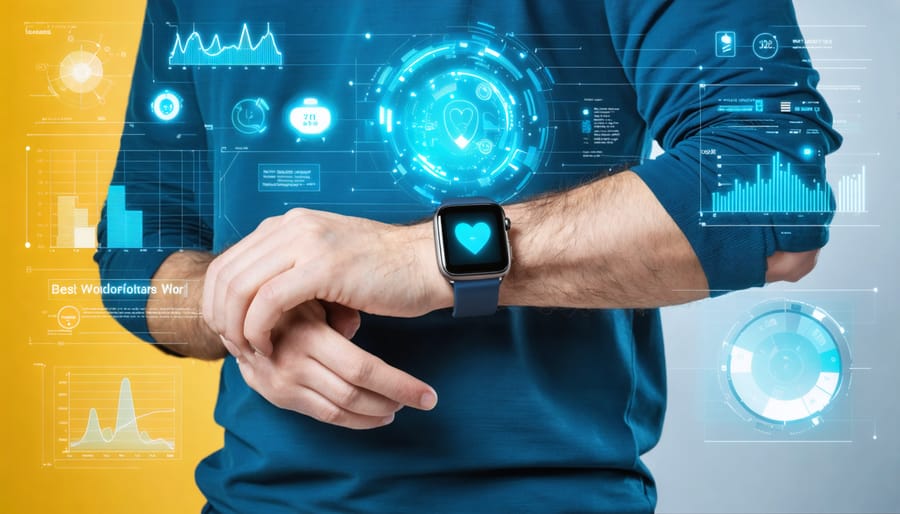
Gone are the days when smartwatches or smartbands were just fashionable accessories for runners that counted steps. The year 2025 marks a strong shift for wearable devices, as they officially become miniature health stations capable of monitoring vital signs 24/7 and providing early warnings of critical risks.
The Shift from “Activity Tracking” to “Preventive Medicine”
According to a report from the International Data Corporation (IDC), the global wearable device market continues to grow by double digits annually. However, the driving force behind consumer purchases has changed. Instead of only focusing on “how far I ran today,” modern users, especially following the COVID-19 pandemic, are more concerned with questions like: “Is my heart beating normally?” or “Is my blood oxygen level stable?”
The convergence of advanced optical sensor technology and AI (Artificial Intelligence) algorithms has transformed these small timepieces into powerful tools for Preventive Medicine.
The Technology Behind the Wrist: How Do They Work?
To understand the accuracy of these devices, we need to look at the core technology:
Photoplethysmography (PPG)
Most devices, from the Apple Watch and Garmin to the Samsung Galaxy Watch, use a flashing green LED on the back. This is Photoplethysmography (PPG) technology.
- Mechanism: Red blood absorbs green light. When the heart beats, blood flow through the wrist increases, absorbing more green light. Between beats, the absorption decreases.
- Application: Real-time Heart Rate measurement and Heart Rate Variability (HRV) measurement. HRV is currently considered a “golden metric” for assessing stress levels and the body’s recovery capacity.
Electrocardiogram (ECG/EKG)
This is the leap that brings the smartwatch closer to a medical device. By touching a finger to the control button (like the Digital Crown on the Apple Watch) while the back of the watch is in contact with the wrist, the user creates a closed electrical circuit that passes through the heart.
- Medical Value: This feature helps detect Atrial Fibrillation (AFib), a common form of heart arrhythmia that can lead to stroke.
- Scientific Evidence: The Apple Heart Study, conducted by Stanford University with over 400,000 participants, demonstrated the capability of wearable devices to warn of AFib, helping thousands receive timely medical intervention.
24/7 Health Monitoring: Vital Signs
Wearable devices today do not sleep when you sleep. The ability to continuously monitor 24/7 provides a comprehensive picture of health that routine hospital checkups might miss.
Sleep and Sleep Apnea Syndrome
Beyond just measuring sleep duration, modern devices deeply analyze sleep stages: Light Sleep, Deep Sleep, and REM (Rapid Eye Movement). Notably, Samsung and Apple have recently received FDA (U.S. Food and Drug Administration) certification for their Sleep Apnea detection feature. By monitoring breathing irregularities through wrist movement, the device can warn users to seek specialized medical attention. This is a life-saving feature, as sleep apnea is a “silent killer” that causes high blood pressure and cardiovascular diseases.
SpO2: Blood Oxygen Saturation
This metric has become extremely important in the context of rising respiratory illnesses. The SpO2 sensor uses red and infrared light to measure oxygen saturation. Although its accuracy cannot entirely replace a specialized finger-clip pulse oximeter used in hospitals, it is good enough to warn of hypoxemia trends when the user is sleeping or climbing.
Practical Benefits for Vietnamese People
In Vietnam, where the rate of non-communicable diseases (cardiovascular, diabetes, hypertension) is rising and affecting younger populations, wearable devices play a crucial role:
- Early Warning for the Elderly: Many families equip their elderly parents with smartwatches thanks to the Fall Detection feature. When the device senses a hard fall and the wearer is immobile, it automatically calls emergency services and sends location messages to relatives.
- Promoting an Active Lifestyle: Gamification features, such as activity rings and virtual badges, create significant psychological motivation for office workers to stand up and move around, reducing the negative effects of a sedentary lifestyle.
Challenges and the Future: Accuracy and Privacy
Despite their advantages, health experts advise caution:
- Accuracy: According to a study in the journal NPJ Digital Medicine, wearable devices are highly accurate when measuring resting heart rate, but they can be inaccurate during high-intensity exercise or for individuals with darker skin tones or tattoos on the wrist.
- Nocebo Effect: Excessive obsession with metrics (such as a low sleep score or low HRV) can sometimes cause reverse anxiety, genuinely leading to a decline in mental health.
The Future: The next “Holy Grail” that tech companies like Apple, Samsung, and Huawei are competing to achieve is Non-invasive Glucose Monitoring. If successful, this will be a revolution, freeing millions of diabetic patients from the pain of daily finger-pricking for blood samples.
Smart wearables do not replace doctors, but they are dedicated “gatekeepers.” In the age of Big Data, possessing a continuous health record on the wrist helps us transition from passively “treating illness” to actively “preventing illness.” That is the core value of modern medicine.